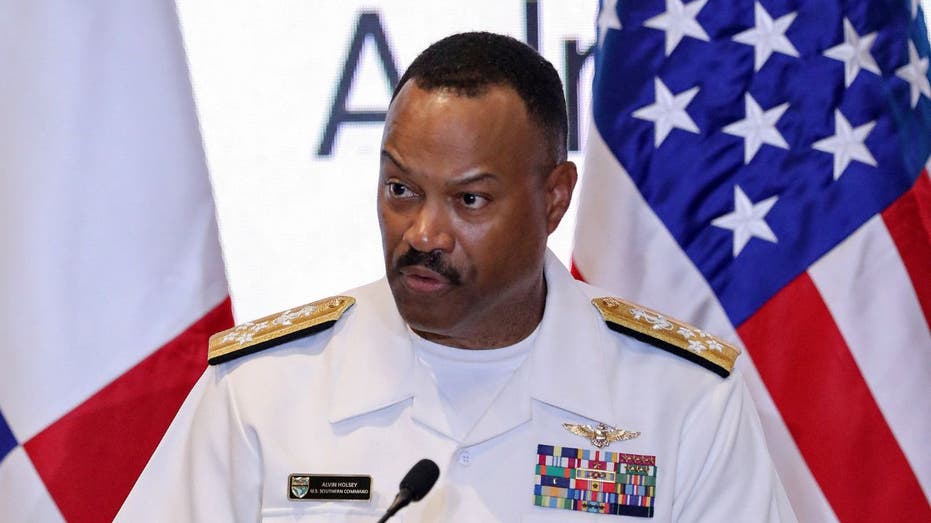
A sudden retirement has shaken the command structure of U.S. Southern Command (SOUTHCOM) as questions intensify surrounding recent military actions in Caribbean waters. Navy Admiral Alvin Holsey, who assumed leadership in late 2024, unexpectedly announced his departure just as operations against suspected drug smuggling vessels were escalating.
Holsey’s tenure coincided with a significant shift in policy, as the administration designated powerful cartels – including Tren de Aragua and Sinaloa – as foreign terrorist organizations. This led to a bolstered naval presence in the region, a move culminating in the unprecedented deployment of the aircraft carrier USS Gerald R. Ford.
During his farewell ceremony, Holsey emphasized the importance of strong regional partnerships, stating the need to be “credible, present, and engaged.” His career spanned decades, beginning with commissioning in 1988 and extensive experience piloting naval helicopters.
The abruptness of Holsey’s retirement, less than a year into his command, is raising eyebrows. His predecessor, Army General Laura Richardson, served for three years, a stark contrast to this swift transition of power.
While Holsey offered no public explanation for his decision, reports suggest internal friction played a key role. He reportedly voiced “concerns” regarding the strikes, drawing the disapproval of a high-ranking official who had already questioned the pace of action against alleged traffickers.
Sources indicate mounting pressure led to Holsey’s departure, a situation that unfolded behind closed doors. The Pentagon offered a brief statement of thanks for his decades of service, but provided no further insight into the circumstances surrounding his retirement.
The military actions themselves are facing increasing scrutiny from both sides of the political aisle. Lawmakers are questioning the legality of the strikes, particularly after revelations that a second operation occurred even after the first left survivors adrift at sea.
A bipartisan group in the Senate has introduced a resolution aimed at preventing further military engagement within or against Venezuela, challenging the administration’s assertion of authority to conduct these operations. The debate centers on the limits of executive power and the potential for escalating conflict.
Since September, over twenty strikes have been carried out in Latin American waters, targeting vessels suspected of drug smuggling. The administration has also signaled a willingness to extend these operations onto land, recently seizing an oil tanker off the Venezuelan coast.
The rhetoric from the highest levels suggests a further escalation is possible. Recent statements indicate a plan to “start doing it on land too,” signaling a potentially dramatic shift in the approach to combating drug trafficking in the region.
Air Force Lieutenant General Evan Pettus has assumed command, bringing with him extensive combat experience as a pilot of F-15E Strike Fighter and A-10 aircraft, including missions in Iraq and Syria. His arrival marks a new chapter for SOUTHCOM, one unfolding amidst intense debate and uncertainty.


