A stark new classification has been issued: fentanyl is now officially designated a Weapon of Mass Destruction. President Trump signed an executive order Monday, elevating the deadly synthetic opioid to the same category as chemical and biological weapons, a move with far-reaching implications for national security and border defense.
The decision wasn’t made in a vacuum. Intelligence reports, previously discussed by the Wall Street Journal, indicated the administration had already been considering fentanyl a “potential chemical weapons threat,” citing its illicit transport via Venezuelan drug routes. This new designation dramatically escalates the response, potentially justifying more aggressive measures against the cartels responsible.
The executive order details a chilling assessment of the threat. It explicitly links the manufacture and distribution of fentanyl to organized criminal networks, framing it as a direct assault on national security. These networks, the order states, aren’t simply dealing drugs; they’re funding operations – assassinations, terrorist acts, and insurgencies – that destabilize regions and undermine American well-being.
Beyond the immediate danger of overdose, the order highlights the escalating violence between cartels vying for control of the fentanyl trade. This turf war, it argues, creates a level of bloodshed that extends far beyond the drug itself. Furthermore, the potential for weaponized deployment of fentanyl in large-scale attacks is now considered a serious and credible threat.
The order directs the Secretary of War and the Attorney General to explore utilizing Department of War resources to aid in domestic law enforcement efforts, specifically targeting fentanyl trafficking. This unprecedented step signals a willingness to potentially involve the military in combating the crisis. It also mandates updates to military protocols for responding to chemical incidents, explicitly including fentanyl as a key threat.
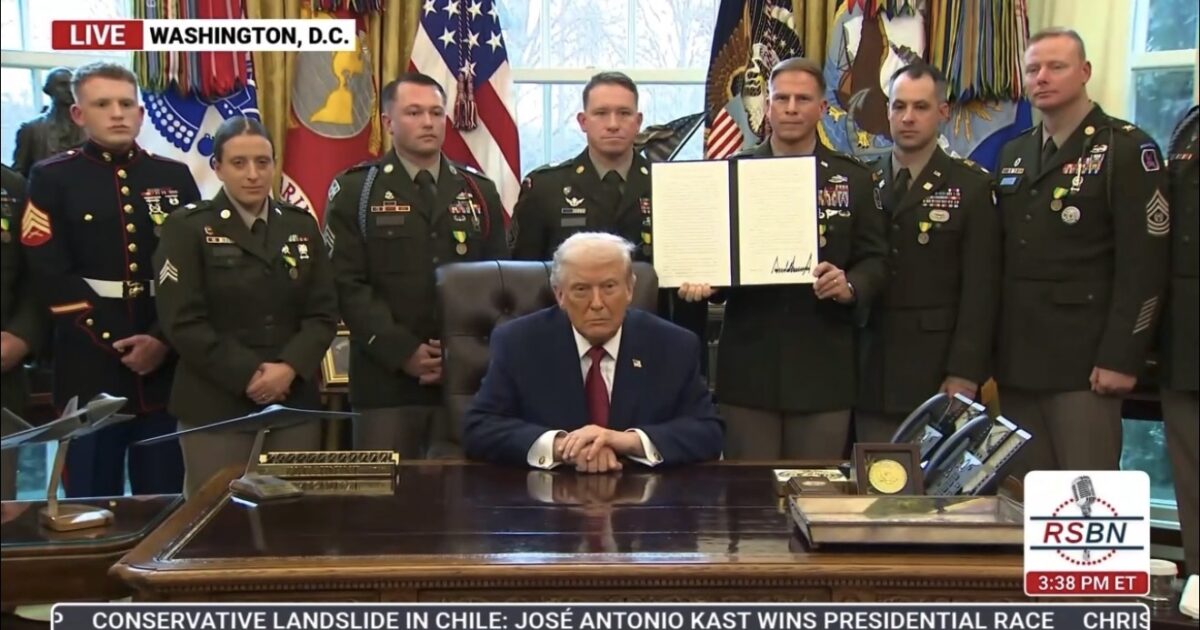
The announcement came during a ceremony honoring service members assisting Customs and Border Protection at the US-Mexico border. As he presented the Mexican Border Defense Medal, President Trump underscored the gravity of the situation, stating that adversaries are deliberately flooding the country with fentanyl, with the intent to cause harm. He likened the crisis to a devastating war, one with a staggering, and often underestimated, death toll.
“There’s no doubt that America’s adversaries are trafficking fentanyl into the United States, in part, because they want to kill Americans,” the President declared. “If this were a war, that would be one of the worst wars.” He estimated the annual death toll from fentanyl to be between 200,000 and 300,000, a figure he believes surpasses commonly reported numbers.
Trump emphasized the profound impact on families shattered by addiction and loss, stating that the devastation extends far beyond the individual victim. He then signed the executive order, proclaiming it a historic step in protecting Americans from the “scourge” of fentanyl. “No bomb does what this is doing,” he asserted, highlighting the sheer scale of the destruction.
The President’s signature was a deliberate act, performed without the use of an autopen, a symbolic gesture emphasizing the importance of the moment. The newly signed order was then displayed alongside the service members honored for their border security work, a visual representation of the administration’s commitment to confronting the crisis.
This executive order represents a significant shift in how the United States views and intends to combat the fentanyl crisis, moving beyond traditional drug enforcement strategies and framing it as a direct threat to national security requiring a comprehensive and potentially forceful response.


