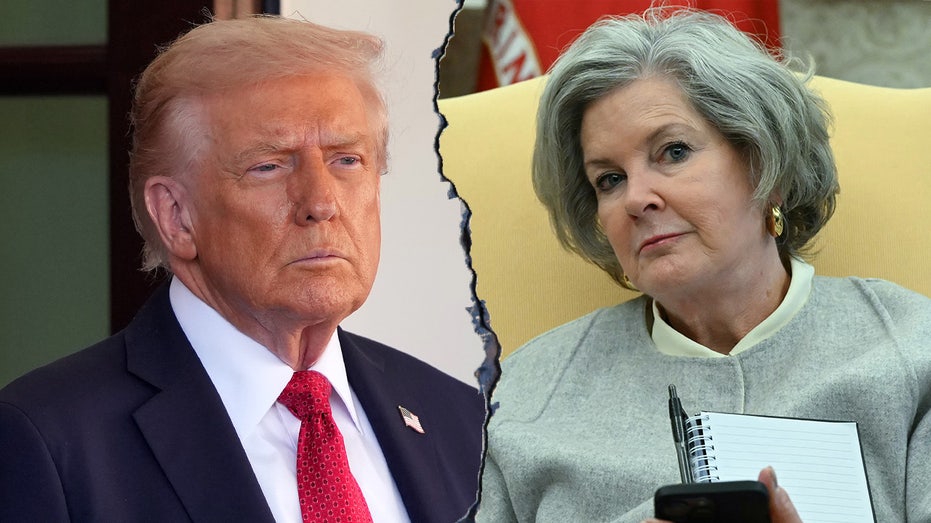
Former President Trump reacted with surprising equanimity to a pointed description of his personality offered by his current Chief of Staff, Susie Wiles. In a recent article, Wiles likened Trump’s character to that of an alcoholic, a comparison that seemingly didn’t land as an insult with the former President.
Trump, speaking to the New York Post, acknowledged he’s often mused about what he might be like if he drank, suggesting a predisposition towards addictive tendencies. He described himself as possessing a “very possessive personality,” a trait he’s openly discussed for years, and expressed gratitude for not being a drinker.
The initial report, published by Vanity Fair, sparked a flurry of responses, but not the outrage some anticipated. Instead, a chorus of support for Wiles emerged from within the Trump administration, even from individuals who were themselves subjects of critical commentary within the article.
Wiles’ assessment wasn’t limited to the former President. The article included candid observations about several key figures, labeling Vice President Vance as a “conspiracy theorist” and criticizing Attorney General Bondi’s handling of sensitive documents. Elon Musk, heading up a government efficiency initiative, was described as an “odd duck.”
Despite these unflattering portrayals, Wiles herself defended the administration, calling it “a world-class Cabinet” and dismissing the Vanity Fair piece as a “disingenuously framed hit piece.” She argued that crucial context was omitted, creating a deliberately negative narrative.
Vice President Vance, surprisingly, downplayed the criticism, revealing a private running joke with Wiles about his penchant for believing true conspiracy theories. Bondi echoed the sentiment, asserting that any attempt to fracture the administration would be unsuccessful.
Russell Vought, a former Office of Management and Budget Director, lauded Wiles as an “exceptional” chief of staff, highlighting the seamless operation of the current administration under her leadership. He dismissed the article as a distraction from their ongoing work.
The defense wasn’t limited to those directly mentioned. Secretary Pete Hegseth characterized the article as a predictable tactic from opponents seeking to discredit the administration’s most effective members. He emphatically praised Wiles as the most trusted and professional chief of staff he’d witnessed.
Ambassador Mike Waltz, a long-time associate of Wiles, emphasized her integrity and unwavering dedication to the former President and the country, calling her the “Queen of Florida politics.” Treasury Secretary Scott Bessent went even further, describing her as the “single most effective operator” he’d ever encountered.
Bessent challenged the article’s portrayal, suggesting it stemmed from the frustration of those who consistently fail to understand the administration’s successes. The unified response underscored a remarkable level of loyalty and a shared determination to move forward, despite the critical spotlight.
Even with requests for comment outstanding from some parties, the overwhelming narrative became one of resilience and solidarity within the Trump administration, a testament to the strength of the team and the leadership of its Chief of Staff.