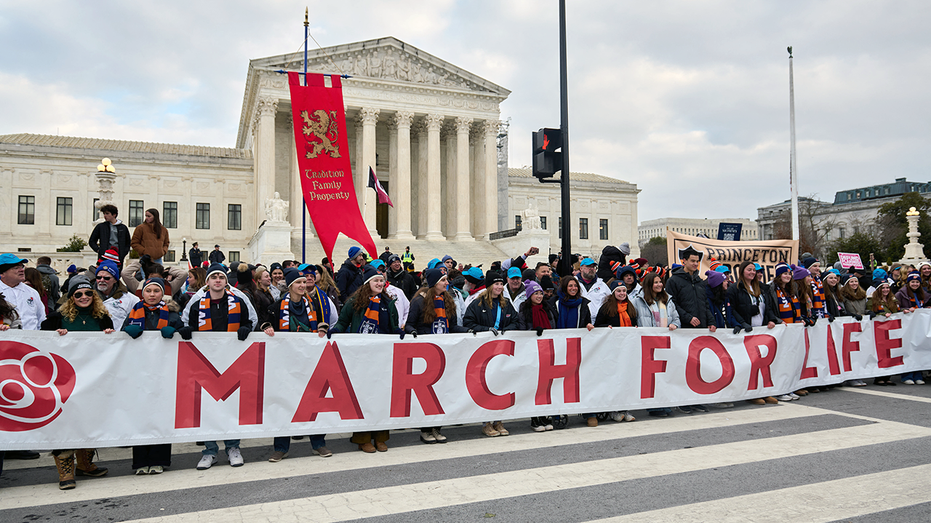
The annual March for Life now carries a weight it hadn't before. Nearly three years after the overturning of Roe v. Wade, the landscape of reproductive rights in America remains fiercely contested, a patchwork of states forging dramatically different paths.
In Kentucky, a new battleground has emerged: the mail. Attorney General Russell Coleman has launched an investigation into out-of-state groups advertising mail-order abortion pills, citing a 2022 law designed to halt their delivery within state lines. This action underscores the escalating efforts to restrict access in a post-Dobbs America.
The investigation centers on organizations like Mayday Health, a New York-based nonprofit that recently began advertising at gas stations across Kentucky and neighboring West Virginia. Their stark message – “Pregnant? Don’t want to be?” – aims to connect individuals with abortion pill services, directly challenging the state’s restrictions.
Coleman’s office is issuing subpoenas to fuel stations, determined to uncover whether these groups are violating the mail-order ban or Kentucky’s consumer protection laws. He issued a clear warning: those attempting to circumvent the law will face the full force of his office.
Mayday Health’s executive director, Liv Raisner, views the investigation as an attack on free speech, pointing to a similar situation in South Dakota where they secured a temporary restraining order against the state. She maintains that abortion pills are safe and accessible, a claim at the heart of the ongoing debate.
West Virginia has already taken a firm stance, enacting a near-total ban on the abortion drug Mifeprestone, a policy later upheld in court. This reflects a broader trend in several states – including Alabama, Arkansas, and Texas – where “trigger laws” went into effect following the Dobbs decision, severely limiting or banning abortion.
The Dobbs case originated in Mississippi, where a 2018 law banning most abortions after 15 weeks initially faced legal challenges. The Supreme Court’s ruling ultimately paved the way for Mississippi’s pre-Roe ban to be enforced, igniting a wave of legislative action across the nation.
However, the response hasn’t been uniform. Arizona lawmakers repealed their state’s ban, while the Wisconsin Supreme Court struck down a pre-Civil War law criminalizing abortion. States like Illinois and Montana have moved to protect and even expand abortion access, enshrining rights in their constitutions.
Virginia voters will soon decide on a similar constitutional amendment, highlighting the ongoing struggle to define reproductive rights at the state level. The Tenth Amendment, which reserves powers not delegated to the federal government to the states, is central to this legal and political conflict.
The overturning of Roe v. Wade didn’t end the debate; it simply shifted the battleground. Now, states are actively shaping the future of abortion access, creating a fractured landscape where reproductive rights are determined not by a national standard, but by the laws of individual states.