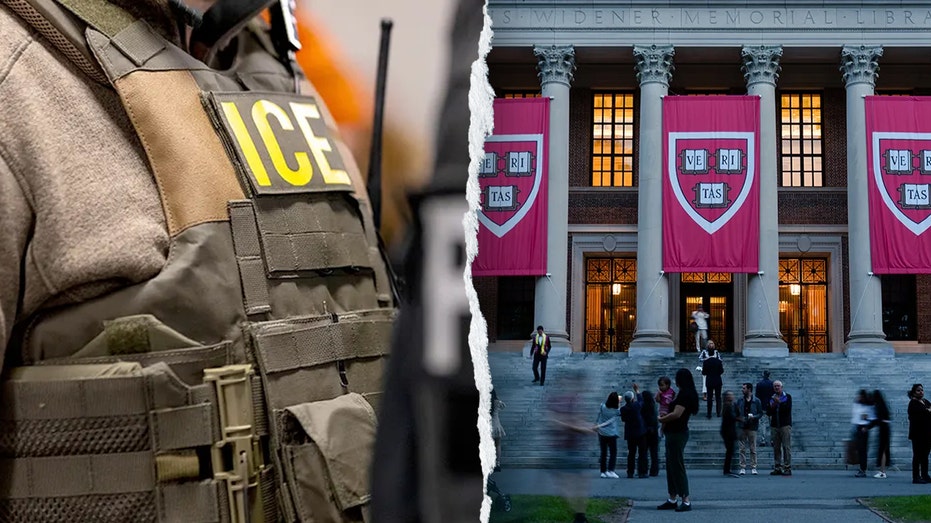
A Harvard Law School professor found himself in the center of a disturbing incident last October, culminating in his arrest by Immigration and Customs Enforcement (ICE). Carlos Portugal Gouvea, a Brazilian national, was taken into custody weeks after allegedly firing a BB gun near a Boston-area synagogue on the eve of Yom Kippur.
The initial explanation Gouvea offered to authorities was startlingly mundane: he claimed he was “hunting rats.” Despite the unsettling nature of the act, synagogue leaders quickly communicated that the incident didn’t appear to be motivated by antisemitism, offering a measure of relief to the community.
Gouvea initially pleaded guilty to the illegal use of an air rifle in November, with other charges – disturbing the peace, disorderly conduct, and vandalism – subsequently dropped. However, the legal repercussions didn’t end there. Just two weeks after the shooting, the State Department revoked his temporary visa, signaling a swift and decisive response.
ICE agents in Boston arrested Gouvea on Wednesday, but the situation took an unexpected turn. Rather than face formal deportation proceedings, Gouvea agreed to voluntarily leave the United States. This decision underscores the gravity of the situation and the potential consequences of his actions.
Department of Homeland Security officials were unequivocal in their condemnation of the incident. Assistant Secretary Tricia McLaughlin stated firmly that working and studying in the U.S. is a privilege, not a right, and that there is “no room” for violent acts, especially those that could be perceived as antisemitic.
McLaughlin emphasized that the U.S. has no obligation to harbor individuals who commit such acts, framing the incident as a direct challenge to the nation’s core principles and a threat to its citizens. The message was clear: those who engage in violence will not be welcomed.
Beyond his role at Harvard, Gouvea held a prominent position in Brazil as an associate professor at the University of São Paulo Law School and CEO of IDGlobal. His research had even influenced major decisions by the Brazilian Supreme Court, and he was actively involved in documenting violence against Indigenous populations.
Gouvea’s involvement extended to several Brazilian organizations, including the Fulbright Commission and various student groups, demonstrating a broad range of professional and civic commitments. His case highlights the complex intersection of academic pursuits, legal consequences, and immigration status.