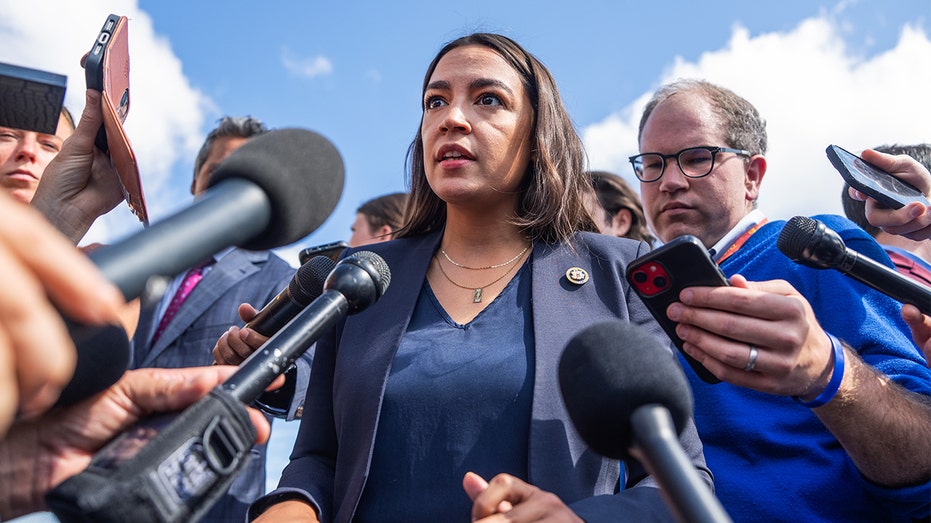
A sense of urgency once gripped the climate debate, fueled by stark warnings of a rapidly closing window for action. Representative Alexandria Ocasio-Cortez, a leading voice in the movement, initially framed climate change as an existential crisis demanding immediate, sweeping change within a decade.
Her Green New Deal, introduced in 2019, wasn’t merely an environmental proposal; it was a ten-year national mobilization. It stemmed from a chilling prediction by the UN’s climate panel – a potential 2.7 degrees Fahrenheit rise above pre-industrial levels by 2030, threatening widespread drought, wildfires, and food shortages.
The plan called for a radical overhaul of U.S. energy policy, a swift transition to renewables, and a dramatic reduction in fossil fuel dependence. Ocasio-Cortez passionately defended the ambitious scope, comparing the climate fight to a modern-day World War II, questioning priorities when the planet’s future hung in the balance.
Now, six years later, as Ocasio-Cortez’s political profile has soared, a question lingers: does she still hold to that ten-year deadline? Despite inquiries, she has remained silent on the matter, a notable shift in public commentary.
Interestingly, 2024 marked the warmest year on record globally, with the Earth’s average temperature rising 2.79 degrees Fahrenheit. Yet, the predicted apocalyptic outcomes have not yet materialized, prompting a reevaluation of the initial projections.
This recalibration isn’t limited to political figures. Bill Gates, a long-time advocate for climate action and significant environmental philanthropist, has recently adjusted his focus. He now argues for prioritizing the alleviation of suffering in a warming world, rather than solely focusing on temperature reduction.
Gates contends that while climate change is a serious problem, it shouldn’t overshadow other critical issues like disease and poverty. He emphasizes that improving the quality of life, particularly for those in the poorest nations, should be the primary goal, acknowledging that climate change won’t necessarily lead to humanity’s demise.
He still believes in mitigating warming, recognizing the benefits of even small reductions in temperature rise. However, his perspective has broadened, acknowledging that for many in the developing world, climate change is just one of many significant challenges to their well-being.
Gates’ foundation continues to invest heavily in global health, education, and development, reflecting this shift in emphasis. The focus is now on building resilience and improving lives in the face of a changing climate, rather than solely attempting to prevent that change.
The evolving perspectives of both Ocasio-Cortez and Gates signal a complex moment in the climate conversation – a move away from solely focusing on impending doom, and towards a more nuanced approach that balances mitigation with adaptation and human development.