For years, the Philippines has been synonymous with gridlock. In Metro Manila, the average commuter faced a staggering 25 minutes just to travel 10 kilometers in 2023 – over 117 hours lost annually to the crawl. This wasn’t simply an inconvenience; it was a drain on the nation’s economic vitality.
Recognizing this critical issue, the Department of Transportation embarked on a bold transformation. Mobility was no longer viewed as a logistical concern, but as a fundamental engine for economic growth, demanding a strategic and comprehensive overhaul.
By 2025, a wave of interconnected initiatives began to reshape the Philippine transport landscape. These weren’t isolated projects, but a carefully orchestrated strategy focused on sustainable urban mobility, inclusive infrastructure, and a future where green spaces and efficient transport seamlessly coexist.

A pivotal shift involved placing the commuter at the heart of the planning process. The Department unveiled plans for an Accessibility and Inclusion Reference Group – a powerful consultative body composed of those who experience mobility challenges firsthand: people with disabilities, seniors, women, and caregivers.
This marked a radical departure from traditional, top-down infrastructure development. For the first time, transport frameworks, feasibility studies, and designs would be co-created with the people they were intended to serve, ensuring genuine accessibility and inclusion.
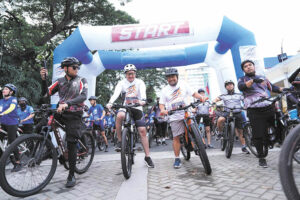
Active transport – cycling and walking – took center stage. The national Active Transport and Safe Pathways Program aggressively expanded bike lane networks, connecting homes, workplaces, schools, and recreational areas. The ambitious goal: 2,400 kilometers of bike lanes by 2028, starting with 260 kilometers of new routes.
Parallel to this expansion, pedestrian infrastructure received renewed focus. Walkways were upgraded and new ones constructed nationwide, prioritizing the safety and accessibility of those choosing to travel on foot, aligning with national development plans.
To ensure these large-scale projects delivered real results, the Department established a Flagship Project Management Office. This centralized oversight body accelerated the implementation of critical initiatives like the Metro Manila Subway, the North-South Commuter Railway, and the EDSA Busway.
The FPMO’s direct monitoring of milestones, budgets, and land acquisition aimed to dismantle bureaucratic roadblocks, streamlining project delivery and improving the daily commute for millions.
A new vision emerged: integrating transport with urban green spaces. The Department recognized the power of green infrastructure to create healthier, more livable cities. Landscaped corridors, shading vegetation, and pedestrian-friendly green areas were incorporated into transport projects.
This wasn’t just about moving people; it was about enhancing the quality of urban life, creating environments where commuters could enjoy greener surroundings while traveling. It was about building resilience and environmental responsibility into the very fabric of the transport system.
The commitment to cyclists and pedestrians was reinforced, emphasizing that these vulnerable road users deserved dedicated space and protective infrastructure. Safety became paramount, recognizing them as legitimate participants in the road network.
Beyond physical infrastructure, a digital revolution was underway. A pilot program on the MRT-3 introduced a seamless digital payment system, allowing commuters to pay with mobile wallets, QR codes, or contactless cards, eliminating frustrating queues.
The EDSA Busway, a vital artery of Metro Manila’s transport network, underwent targeted station upgrades and rehabilitation. Plans were also developed to leverage private sector expertise through a public-private partnership, ensuring the busway’s long-term sustainability and modernization.
To truly understand the commuter experience, Department officials were directed to use public transport weekly. This wasn’t a symbolic gesture; it was a commitment to firsthand knowledge, ensuring policies and projects were grounded in the realities faced by everyday riders.
These initiatives – inclusive planning, active transport expansion, flagship project management, green space integration, and digital innovation – represent a multi-faceted approach to modernizing mobility in the Philippines. The challenge now lies in scaling these successes across the nation.
With coordinated execution and continued public engagement, the Philippines is charting a course toward a more mobile, connected, and inclusive future – a future where getting around isn’t a struggle, but a seamless part of daily life.