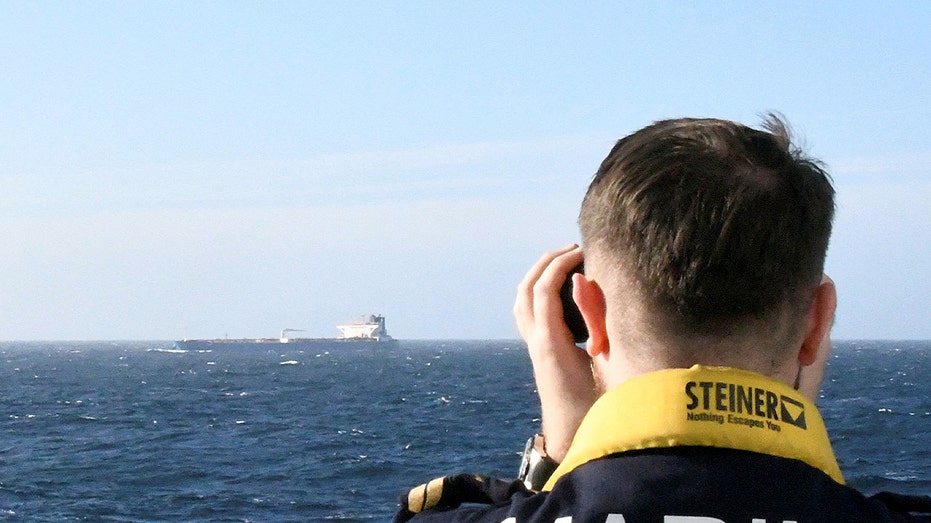
A tense drama unfolded in the Mediterranean Sea as the French navy intercepted a Russian oil tanker, suspected of being a key player in Moscow’s clandestine network designed to circumvent Western sanctions. The operation, confirmed by President Emmanuel Macron, targeted a vessel operating under a false flag, a tactic increasingly employed to obscure the origin and destination of Russian oil.
The tanker, identified as the Grinch, had departed from Murmansk, a northern Russian port, flying the flag of Comoros – a deliberate attempt to conceal its true identity. Intelligence gathered jointly by France and the United Kingdom pinpointed the vessel’s location between Spain and Morocco, triggering the decisive intervention.
President Macron revealed the operation occurred on the high seas, bolstered by the support of multiple allied nations. The Grinch was subsequently diverted, not to a port, but to a designated anchorage for a more thorough and revealing inspection.
French maritime police discovered discrepancies in the vessel’s documentation, casting serious doubt on the legitimacy of its registered flag. This raised immediate concerns that the Grinch was actively engaged in concealing its Russian origins and evading international sanctions imposed following the invasion of Ukraine.
This interception isn’t an isolated incident. Western authorities have dramatically increased their scrutiny of Russian-linked vessels in recent months, seizing another sanctioned tanker in the Atlantic Ocean just weeks prior. The escalating actions signal a determined effort to disrupt Russia’s oil exports and choke off a vital source of revenue.
The intercepted tanker is part of a growing “shadow fleet” – a collection of aging, poorly maintained vessels that constantly change names, ownership, and flags to remain undetected. Experts estimate this fleet numbers around 1,400 tankers, many already subject to sanctions by the U.S., Britain, and the European Union.
Despite nineteen rounds of sanctions levied against Russia by the European Union, oil continues to flow, primarily to China and India, often at significantly reduced prices. This continued trade fuels the Russian war machine, prompting increasingly urgent calls for more robust enforcement.
The situation has ignited criticism from Ukrainian President Volodymyr Zelenskyy, who publicly questioned why the United States appears more effective at intercepting these vessels than European nations. He argued that Russian oil is being transported along European coastlines, directly funding the conflict in Ukraine and destabilizing the continent.
Zelenskyy’s pointed remarks underscore the growing frustration with the perceived lack of decisive action and the urgent need for a unified, more aggressive strategy to dismantle the shadow fleet and cut off Russia’s access to critical oil revenue.
The Grinch now awaits further verification, escorted closely by the French navy, a stark symbol of the escalating battle to enforce sanctions and disrupt the flow of funds supporting the ongoing conflict.