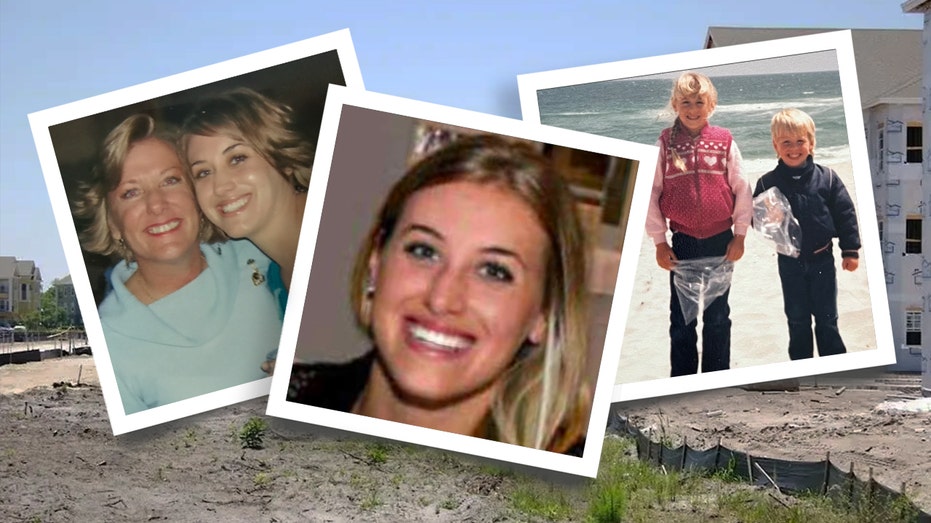
Twenty years have passed since Jennifer Kesse vanished, yet her parents, Drew and Joyce, continue their relentless search, fueled by a glimmer of hope offered by emerging technologies.
On January 24, 2006, a 24-year-old Jennifer failed to arrive at work in Orlando, Florida, initiating a nightmare that continues to this day. The passage of time hasn’t brought closure, only a persistent ache and unwavering determination.
“We look for Jennifer pretty much every day,” Drew and Joyce shared, their voices heavy with the weight of two decades. “It seems like an eternity. It seems that we’re still living in a surreal state.”
Jennifer’s car was discovered a mile from her home, a silent clue in the unfolding mystery. Surveillance footage captured a person of interest near the vehicle, walking away, but the crucial detail – a clear face – remained obscured.
The initial hours were marked by a chilling lack of urgency. When Jennifer didn’t report to work, her father immediately attempted to reach her, relying on a long-held family pact to always answer each other’s calls. Only voicemail answered.
A frantic two-hour drive from Tampa to Orlando revealed an empty apartment, eerily normal yet profoundly wrong. Outfits were laid out on the bed, suggesting a typical morning interrupted by an unforeseen event.
The initial police response was dismissive, attributing Jennifer’s disappearance to a possible argument with her boyfriend. “They looked around her apartment, shrugged their shoulders and said, ‘She had a fight with her boyfriend probably, she’ll be back,’” Drew recalled, a painful memory of a lost opportunity.
Driven by desperation, the Kesses pursued legal action, ultimately gaining access to Jennifer’s extensive case file – a daunting 16,000 pages filled with unanswered questions and frustrating dead ends.
The emotional toll has been immense. “It exhausts you. It drains you physically, mentally and emotionally, and it will in time take a toll on your actual physical health,” they confessed, their resilience tested by years of uncertainty.
Now, with the Florida Department of Law Enforcement taking the lead, the Kesses are embracing innovative investigative techniques. They are collaborating with an artificial intelligence firm, hoping to unlock hidden clues within the case file and surveillance video.
A key focus is identifying the person of interest through unique physical characteristics. Drew believes even subtle details can be revealing. “An ear is just like an eye or a fingerprint. It’s very unique to a person,” he explained, emphasizing the potential of this approach.
Recent advancements in DNA technology have also yielded promising results. New samples were tested last year, bringing investigators closer to identifying individuals they wish to question.
Despite the years, Drew maintains a chilling conviction: Jennifer was abducted shortly after her disappearance and taken far from home. He believes her vulnerability as a young woman living alone made her a target.
Nearing their seventies, Jennifer’s parents remain steadfast in their commitment. Their determination is unwavering, a testament to the enduring power of parental love.
“Till we die,” Joyce declared, her voice resolute. “Whatever it takes. There’s no quit in us.” Their search continues, driven by the hope that one day, they will finally bring Jennifer home.