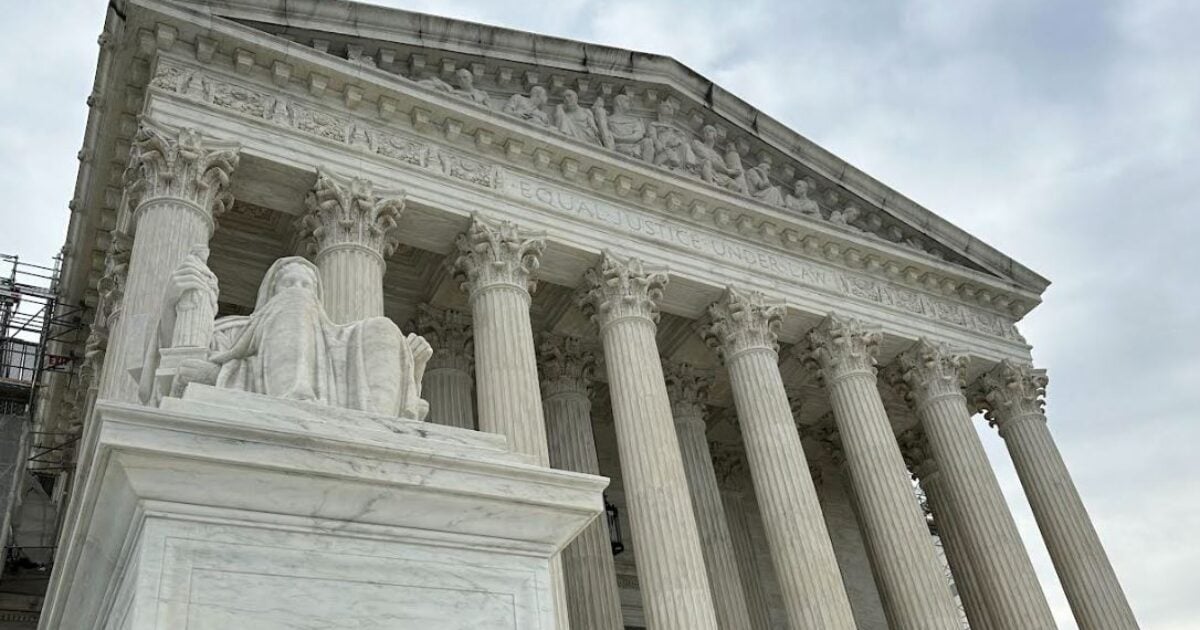
The nation’s highest court has agreed to hear a case with potentially seismic implications for American citizenship. The Supreme Court will now determine the constitutionality of a controversial executive order issued by former President Trump, challenging the long-held principle of birthright citizenship.
The legal battle began when President Trump, early in his second term, formally requested the Supreme Court to dismantle birthright citizenship as it’s currently understood. This action ignited immediate opposition, setting the stage for a landmark legal confrontation.
A coalition of Democratic attorneys general swiftly filed suit, seeking to block the implementation of the executive order. They argued the order fundamentally misunderstands and threatens the 14th Amendment’s guarantee of citizenship.
Prior to the Supreme Court’s intervention, multiple federal judges had already issued rulings against the order, halting its progress. These decisions underscored the significant legal hurdles facing the attempt to redefine who qualifies for American citizenship.
Judge John Coughenour, appointed by President Reagan, initially issued a nationwide temporary injunction, preventing the order from taking effect. Later, Judge Leo Sorokin, an Obama appointee, delivered a detailed 31-page ruling, emphasizing the potential for lasting harm even with a temporary loss of citizenship.
The core of the former President’s argument rested on the claim that the 14th Amendment has been misinterpreted by those on the left. He specifically targeted what he termed “anchor babies,” alleging the amendment was never intended to grant citizenship in such cases.
The executive order itself stipulated that no federal agency would issue citizenship documents, or accept those issued by states, to individuals meeting specific criteria. These criteria focused on parents who were unlawfully present in the U.S. or temporarily residing in the country at the time of the child’s birth.
The order’s legal justification asserted that the 14th Amendment was never meant to provide universal birthright citizenship. It argued that the phrase “subject to the jurisdiction thereof” historically excluded individuals not fully connected to the United States.
Supporting this claim, the order pointed to existing legislation mirroring the 14th Amendment’s language, suggesting a consistent, limited interpretation of birthright citizenship throughout American history. This interpretation forms the foundation of the legal challenge now before the Supreme Court.
This case marks the first time the Supreme Court will evaluate a core component of the former President’s immigration agenda on its full legal merits. Previous challenges to his immigration policies were addressed through emergency requests or at earlier stages of litigation.
The Court’s decision promises to be a defining moment, potentially reshaping the understanding of citizenship and its implications for generations to come. The outcome will undoubtedly reverberate throughout the legal and political landscape.



![NARCO-BOAT SHOWDOWN: Coast Guard SNIPERS Deliver JUSTICE! [VIDEO]](https://static.foxnews.com/foxnews.com/content/uploads/2025/12/operation_pacific_viper_dhs.gif)