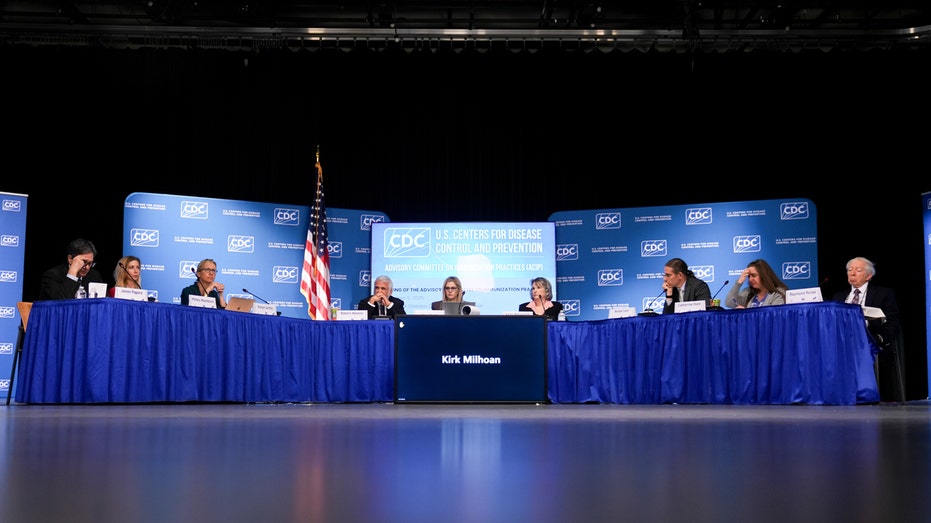
A significant shift in national vaccine policy began Friday as President Trump initiated a comprehensive review of all childhood vaccine recommendations across the United States. This action followed a pivotal decision by a Centers for Disease Control and Prevention (CDC) advisory committee to eliminate its longstanding recommendation for the Hepatitis B vaccine to be administered at birth.
The CDC committee’s vote centered on the belief that the vaccine was largely unnecessary for healthy newborns, given the primary transmission routes of Hepatitis B – typically through sexual contact or contaminated needles. The President echoed this sentiment, stating the majority of infants face minimal risk from the disease.
Beyond the Hepatitis B decision, the President voiced strong criticism of the existing American childhood vaccine schedule, characterizing it as excessively demanding. He highlighted that the schedule previously mandated 72 vaccine “jabs” for infants, a number he deemed far exceeding that of any other nation globally.
The President asserted that this extensive schedule lacked justification and had been subject to questioning by both concerned parents and scientific experts. He expressed his own long-held doubts about the necessity of such a rigorous vaccination protocol for healthy babies.
To address these concerns, the President signed a Presidential Memorandum directing the Department of Health and Human Services (HHS) to expedite a thorough evaluation of vaccine schedules utilized in countries worldwide. The goal is to realign the U.S. schedule with what the President described as the “Gold Standard of Science and COMMON SENSE.”
The President expressed full confidence in HHS Secretary Robert F. Kennedy Jr., and the CDC to swiftly and accurately complete this critical evaluation, prioritizing the well-being of the nation’s children. This initiative signals a potential reshaping of preventative healthcare practices for future generations.