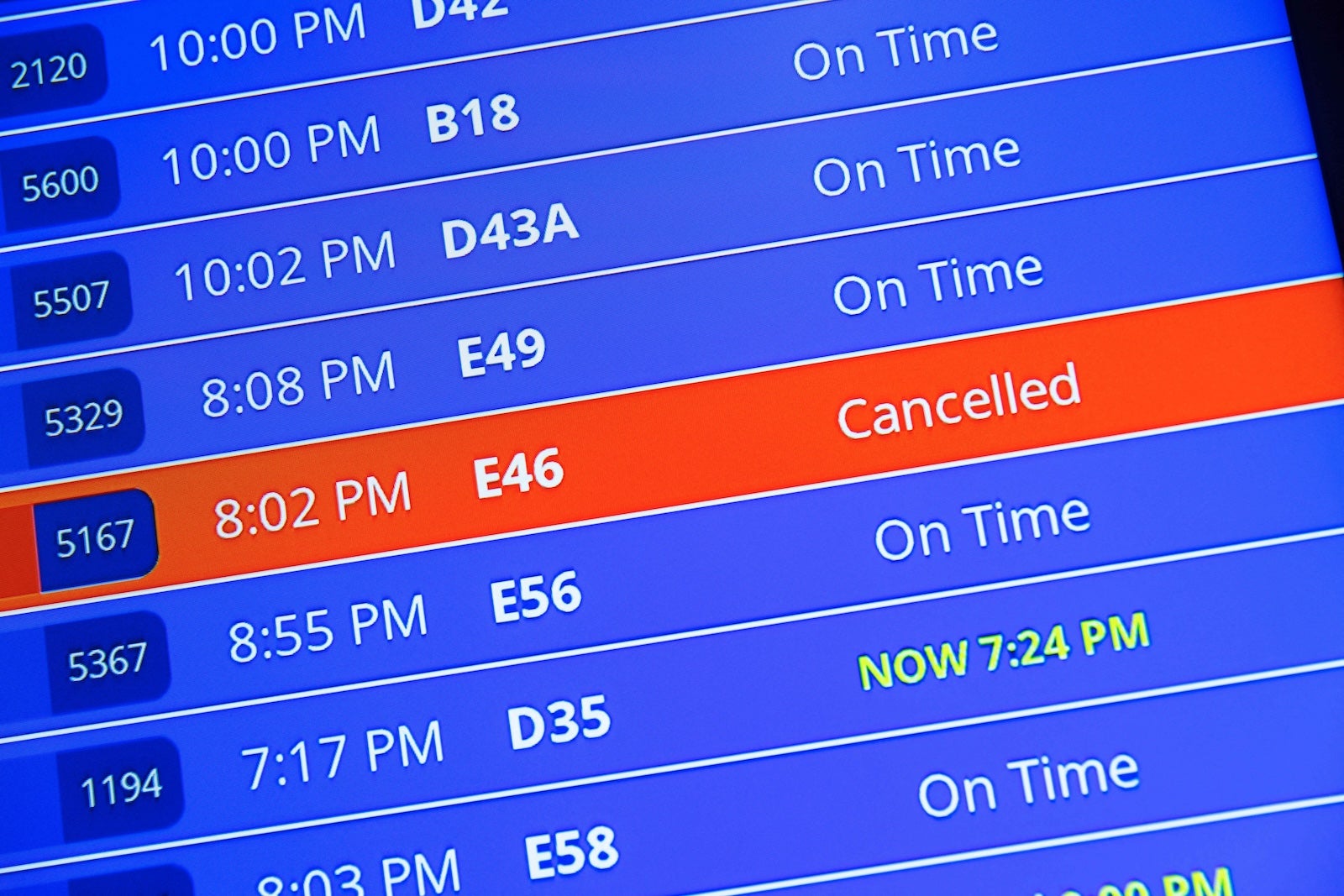
A chilling wave of potential travel chaos is descending upon the skies, threatening to disrupt flights nationwide even for those far from the storm’s immediate reach. The coming days, stretching into early next week, demand vigilance from anyone with travel plans, as ripple effects could impact journeys across the country.
Imagine a seemingly safe flight from Los Angeles to San Francisco suddenly grounded. The reason? The aircraft or the very crew scheduled for that route might be stranded, battling icy conditions in Atlanta or buried under snow in Philadelphia. This interconnectedness of air travel means a problem in one location can quickly cascade into delays and cancellations hundreds of miles away.
The vulnerability extends beyond major hubs. Even cities not directly in the storm’s path are susceptible to disruption, highlighting the fragility of the national air transportation system during severe weather events. Passengers should prepare for the possibility of altered schedules and unexpected changes.
This isn’t simply about inconvenience; it’s about understanding the complex logistics that keep planes in the air. A single snowstorm can unravel a carefully orchestrated network, impacting not just individual flights, but the entire system’s ability to recover quickly.
The key takeaway is proactive awareness. Travelers should anticipate potential issues and remain flexible, understanding that conditions can change rapidly. Staying informed about the storm’s progress and potential impacts is crucial for navigating the coming days.